
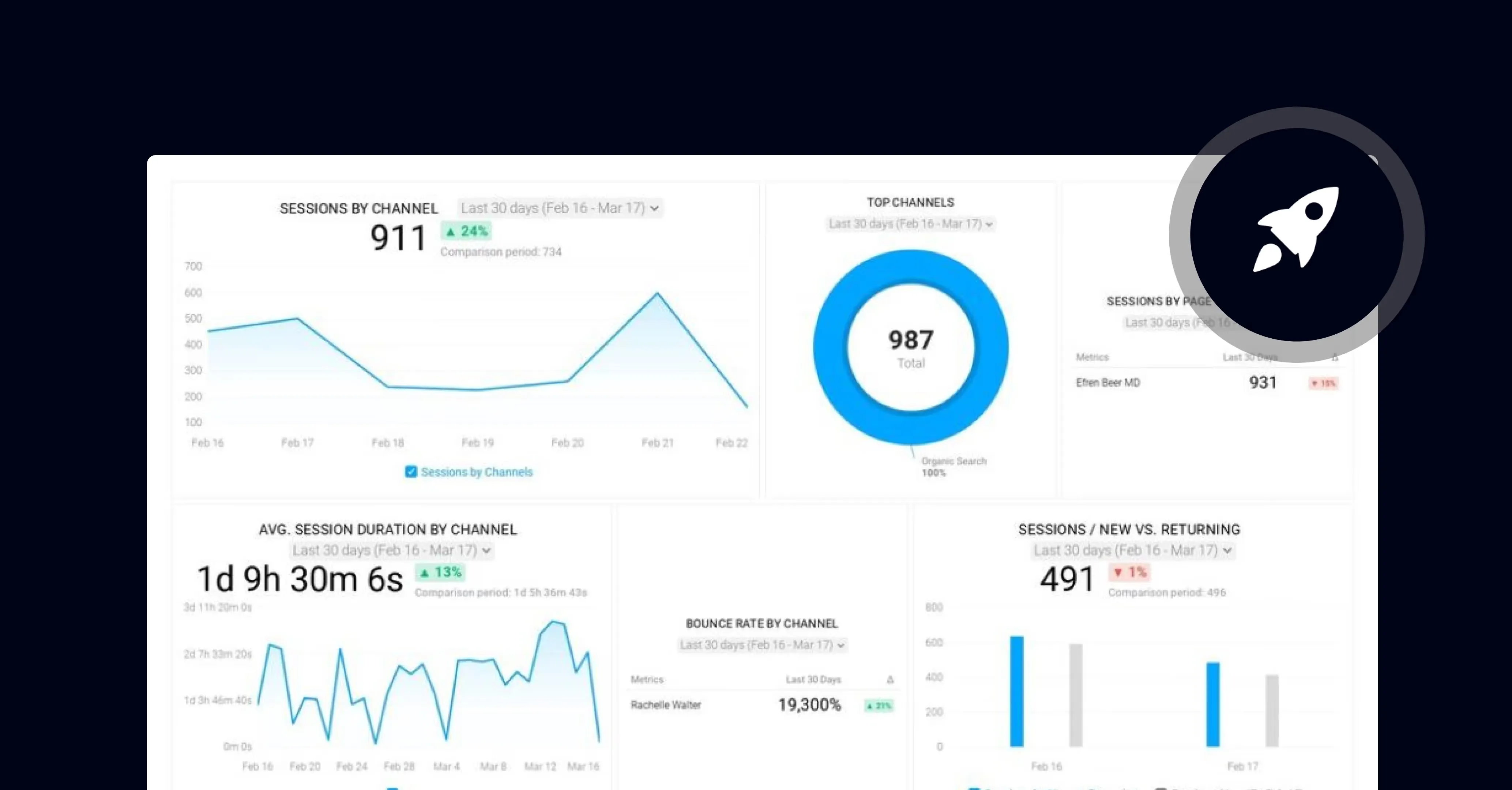
The conversion guide for Swiss SMEs
What is conversion rate optimisation (CRO)?
Conversion optimisation means:
You improve your website so that more visitors become enquiries or clients.
A conversion is any desired action on your website. For example:
- Filling in the contact form
- Requesting a quote
- Booking an appointment
- Downloading a white paper
- Buying a product
The goal of CRO is not more traffic.
The goal is more results from the traffic you already have.
If 100 people visit your website and one person gets in touch, your conversion rate is 1 per cent. If you generate two enquiries, you have doubled your conversion rate. Without a bigger advertising budget.
That is exactly what this conversion optimisation guide is about.
Who this guide is for
This conversion optimisation guide is for Swiss SMEs and startups that no longer want to leave their website to chance. It is written for companies that understand their website has to be more than a digital brochure.
Specifically, this guide is for:
- Swiss SMEs
- Growth-focused startups
- Managing directors
- Marketing managers without CRO experience
Many managing directors sense that their website is not living up to its full potential. They know they should be visible online, but they are not sure why so few enquiries come in despite the traffic.
Growth-focused startups are under particular pressure. Investors expect results. Marketing budgets have to be used efficiently. Every improvement in the conversion rate has a direct impact on growth.
Marketing managers without CRO experience often know the channels but not the mechanics behind them. They run campaigns, optimise keywords and publish content. But they ask themselves:
Why do visitors come, but hardly any qualified leads?
Why do users leave early?
Why does almost nobody fill in the form?
If your website is supposed to generate leads and not just look good, you are in the right place.
Many SMEs already invest actively in reach:
- SEO
- Google Ads
- LinkedIn campaigns
These measures bring visitors to your website. They increase visibility and clicks. But traffic alone does not bring in revenue.
If the website:
- Has unclear positioning
- Does not address a specific problem
- Has no clear calls to action
- Offers too many distractions
- Is technically slow or confusing
Then your marketing budget goes up in smoke.
You pay for clicks.
But you get no enquiries.
The problem often does not lie in the marketing channel.
It lies in the website itself.
Conversion optimisation closes exactly this gap. It makes sure your website is strategically structured, builds trust and guides visitors step by step to an enquiry.
Instead of putting more money into advertising, you make better use of the potential you already have. Even a small increase in your conversion rate can significantly raise the number of leads you get.
Conversion optimisation is the lever that turns traffic into predictable growth.
Who we are: Bloq Labs, your CRO experts
We are Bloq Labs, the web design agency for Swiss SMEs.
We help Swiss SMEs and startups turn their website into a real sales tool. For us, a website is not a design project but a strategic instrument for generating leads and increasing revenue.
We build websites that perform. Not just beautiful. Measurably successful. Every decision on structure, design and copy follows one clear goal: more qualified enquiries for your business.
Our specialisms:
- Conversion optimisation for SMEs
- Strategic website structure
- Performance-focused web design
- Implementation with Webflow
We work with Swiss companies that want to grow digitally. Many of our clients face the same challenge: the traffic is there, but the enquiries fall short of expectations. That is exactly where we come in.
This guide is based on our practical experience from numerous projects with SMEs. The content follows our internal conversion playbook
and has been deliberately prepared so that even beginners can follow every step.
Our standard is clear:
A website has to support revenue. Otherwise it is just a cost.
Definition: what is a lead?
A lead is a person or a company that shows interest in what you offer.
For example:
- Someone fills in your contact form
- Someone requests a quote
- Someone signs up for a consultation
Not every lead is equally valuable. There are different types.
MQL: marketing qualified lead
A person shows interest but is not ready to buy yet. Example: downloading a guide.
SQL: sales qualified lead
A person is genuinely interested and ready for a conversation. Example: a request for a quote.
For SMEs, one question above all is decisive:
How many qualified leads does your website generate per month?
Because leads are where revenue begins.
Why you need CRO and what it brings you
Your website at the centre of your CRO strategy
Your website is not just a digital business card.
It is your central sales tool.
No matter where the traffic comes from:
- Google
- LinkedIn
- Recommendations
- Newsletters
- Online advertising
In the end, almost everyone lands on your website.
That is where it is decided:
- Whether trust is built
- Whether your offer is understood
- Whether an enquiry comes in
If your website is not clearly structured and has no convincing message, you lose potential clients. Even if you are buying good traffic.
That is why conversion optimisation always starts with the website.
Why conversion optimisation pays off for you
Many SMEs underestimate the competition online.
Market pressure is rising.
In traditional niche industries, the competition is often still poorly positioned online. That is exactly your opportunity. If you invest now, you can position yourself clearly. But a website only pays off if it converts.
At the same time, it is getting easier and easier to build a website.
- AI tools
- Website builders
- Templates
That lowers the barrier to entry.
But it increases the competition.
Almost every company has a website today.
Only a few have a strategically optimised website.
On top of that, consumers are spoilt.
They expect:
- Clear design
- Fast load times
- Simple navigation
- Offers that are easy to understand
If your website is complicated or looks unprofessional, visitors click away immediately.
Local competition is growing too.
At the same time, the online market offers huge opportunities.
You can:
- Open up new regions
- Reach new target groups
- Generate more qualified leads
Conversion optimisation makes sure you actually seize these opportunities.
An example:
If you currently get 1 enquiry per 100 visitors and increase your conversion rate to 3 per cent, you triple your enquiries. Without more traffic.
That is the lever.
The next chapter is about how to optimise your website step by step.
Your conversion guide: 10 steps to an optimised website
Strategy and structure
Before you optimise the design or individual copy, you need clarity at a strategic level. Conversion optimisation does not start with colours or buttons. It starts with positioning, defining your goals and a well-thought-out content strategy.
Your website needs a clear goal. Not several vague wishes, but one prioritised main conversion.
So ask yourself very specifically:
- What kind of leads do I want to generate?
- Which services or products are the focus?
- Which target group do I want to reach?
Do you want initial consultations with SMEs from your region?
Or enquiries from scalable startups?
Or concrete quote requests for a clearly defined product?
No goal, no conversion optimisation.
If you do not know whom you want to convince, you cannot tell the right story either.
Content is central here. Content is not filler. Content leads. Your content has to tell a clear story:
- We understand your problem.
- We have a structured solution.
- We have already done this successfully.
- This is your next step.
That is storytelling in a B2B context. No emotional fairy tales, but a clear, comprehensible chain of arguments.
The structure of your website should be strategic. A typical structure for SMEs looks like this:
- Home page
- Service pages
- Industry pages
- About us page
- Resources or blog
- Contact page
Every page has a job in the decision-making process.
The home page creates an overview and trust. In a few seconds it answers the question: am I in the right place?
The service pages do the concrete selling. They are about problems, solutions, benefits and results. Here the language has to be precise and get to the point.
The industry pages speak to specific target groups. An IT provider can argue differently for a bank than for a manufacturing company. When a target group feels directly addressed, the conversion rate rises significantly.
The about us page builds trust. People buy from people. It is about attitude, competence and credibility.
Resources or blog content show expertise. They matter for SEO, but also for trust in the decision-making process.
Very important:
Do not design for yourself as the founder.
Design for your ideal customer profile (ICP).
This is exactly where many SMEs go wrong. They design their website to their own taste. Modern, creative, technical, minimalist. But the question is not what you like. The question is: what convinces your target group?
Typical design mistakes:
- A hardware company looks like a software startup
- An IT firm for SMEs comes across like an AI research lab
- A trade business uses a design that would suit a creative agency better
When design, language and target group do not match, friction arises. Visitors do not feel understood. They do not see immediately whether the offer is meant for them.
The language has to suit the target group too.
The managing director of an SME wants clarity.
No buzzwords.
No empty promises.
Instead, concrete results, figures and certainty.
A good content strategy therefore defines:
- Which problems your target group really has
- Which words they use themselves
- Which objections they raise in the decision-making process
- What proof they need
Only when these points are clear does design make sense.
Only when the positioning is clear can storytelling work.
Only when the language fits is trust built.
The right agency does not think in colours and layouts first.
It thinks in target groups, decision-making processes and clear conversion goals first.
When strategy, content and design work together properly, the conversion rate rises noticeably.
The hero section: the decisive moment
The hero section is the top area of your home page.
It is the most important area of your entire website.
The 3-second rule applies here.
A visitor has to understand immediately:
- What you offer
- Who you offer it to
- Why they should work with you
How the elements work together is decisive:
- H1 claim
- Imagery
- Call to action
- Layout and design
The H1 claim is no place for creative gimmicks.
Bad example:
Good example:
Say clearly what you do and for whom.
Your imagery supports your message.
Images of real people often work better than abstract graphics. Why?
- People trust people
- Faces create closeness
- Emotions increase attention
That is why big companies advertise with people and not just with products.
Your call to action has to be visible.
- Directly in the visible area
- Clearly worded
- Not hidden in the menu
For example:
- Book a free initial consultation
- Request a quote
- Secure your consultation now
The hero section decides whether someone keeps scrolling or leaves.
In the next section, we optimise your calls to action in detail.
Optimise your calls to action
A call to action is any prompt to act on your website.
It tells the visitor what to do next.
Many SMEs give away potential here.
Typical weak CTAs:
Better versions:
A good CTA is:
- Clear
- Actively worded
- Benefit-oriented
- Placed where it can be seen
Placement matters too.
CTAs belong:
- In the hero section
- After important arguments
- Below service descriptions
- At the end of every page
A visitor should never have to search for how to contact you.
Copy is king: focus on benefits and USPs
Copy is the most important conversion lever on your website. It comes before design. Always.
You can have a visually perfect website. Modern. Minimalist. Technically clean. But if your copy is unclear, interchangeable or too general, your website will not convert.
Design supports your message.
But copy carries it.
Many SMEs invest in the look first. Colours, layout, images, animations. The content is added afterwards. Written quickly. Often generic. Often with empty phrases such as holistic, innovative or future-oriented.
The problem is not the design.
The problem is a lack of clarity.
People do not buy features.
They buy results.
They buy outcomes.
A feature describes what you do.
An outcome describes what the client gets out of it.
If you write:
We develop modern websites with a powerful CMS.
Then you are describing a feature.
If you write:
You get a website that generates enquiries predictably and that your team can maintain itself.
Then you are describing a result.
That is what convinces.
Your copy must therefore consistently answer:
- Which specific problem do you solve?
- Who do you solve it for?
- How exactly do you solve it?
- Why are you the best choice?
If a visitor does not see these answers within a few seconds, you lose them.
Do not beat about the bush.
Avoid clichés.
Avoid empty promises.
Say clearly what you do.
Say clearly for whom.
Say clearly why people should buy from you.
In B2B in particular, decision-makers want clarity. They have little time. They scan content. They look for relevance. If your copy does not address their problem directly, they click on.
Good conversion copy is therefore:
- Clearly worded
- Focused directly on the problem
- Benefit-oriented
- Free of unnecessary jargon
Structure also determines the impact. Long blocks of text are hardly read. Content has to be quick to take in.
That is why you should structure your content into:
- Short paragraphs
- Boxes with icons
- Bullet points
- Clear subheadings
This lets readers scan your line of argument. At the same time, you help search engines understand what your page is about.
Positioning is the core of every strong piece of copy.
If you try to speak to everyone, you come across as interchangeable.
If you say clearly who your offer is meant for, relevance rises.
So define clearly:
- Your ideal customer
- The main problem of this target group
- Your specific solution
The sharper your positioning, the stronger your copy.
The clearer your message, the higher your conversion rate.
Good copy is not an add-on.
It is the foundation of every successful website.
Form optimisation
The form is often the last step before the enquiry.
This is where it is decided whether a visitor really becomes a lead.
Many forms are too complicated.
Basic rules:
- Clean, calm design
- A clear heading
- A clear explanation of the added value
- 4 to 6 fields at most
The heading is decisive.
Bad:
Contact form
Better:
Secure your free initial consultation
Request a no-obligation quote
Always explain what happens after the form is submitted.
For example:
- We will get back to you within 24 hours
- You will receive a free analysis
- The conversation is non-binding
The less uncertainty, the higher the conversion rate.
Reduce the number of fields to the bare minimum:
- Name
- Email
- Company
- A short description of your request
Every additional field lowers the conversion rate.
Also place social proof right next to the form:
- Client logos
- A short testimonial
- A note on the number of successfully completed projects
This removes the visitor's last hurdle.
Technical performance is not negotiable
Even the best strategy achieves nothing if your website is slow.
Technical basics:
- Mobile optimisation
- Fast load times
- Clear navigation
Most users are on mobile.
If your website is confusing on a smartphone, you lose leads.
Load time is decisive too.
If a page takes more than a few seconds to load, many visitors leave.
That affects not only your conversion rate but also your ranking on Google.
Performance is not a nice extra.
It is a must.
Landing pages for campaigns
If you run ads, do not simply send the traffic to your home page.
Every campaign needs its own landing page.
Why?
- A clear message
- No distracting menu
- Focus on one goal
- One clear call to action
Example:
If you run Google Ads for a particular service, that service needs its own page with:
- A clear problem
- A concrete solution
- Matching social proof
- A clear form
The more specific the page, the higher the conversion rate.
A/B testing: ask your clients
Many SMEs think conversion optimisation is highly complex.
In truth, you can start simply.
Talk to your clients.
Ask simple questions:
- Why did you choose us?
- What mattered most to you?
- What convinced you?
- What almost held you back?
These answers are worth their weight in gold.
They help you:
- Improve your hero section
- Word your benefits more clearly
- Adjust your CTAs
You do not need complicated tools to get started.
You need honest feedback.
The best CMS for conversion-optimised websites: Webflow
If you really want to optimise your website strategically, you need the right system in the background.
A CMS (content management system) is the technical foundation of your website.
Many systems are either:
- Too rigid
- Too complicated
- Too slow
For conversion optimisation you need flexibility, performance and ease of use.
Why Webflow is ideal for CRO
If your website is supposed to win new clients actively, just any CMS will not do. You need a system that does not slow you down. A system that supports marketing, performance and conversion instead of blocking them.
For SMEs that want to win new clients online, Webflow is, strategically speaking, one of the strongest systems on the market.
Why?
Because conversion optimisation needs three things:
- Full control over structure and design
- Quick adaptability
- Technical performance at a high level
This is exactly where Webflow plays to its strengths.
1. Structure and design follow the strategy
Many CMSs are based on templates. You choose a theme and adapt your content to it. The problem: your conversion strategy has to take a back seat to the layout.
With Webflow, it is the other way round.
You define your structure first:
- Which target group are you addressing?
- Which chain of arguments leads to the enquiry?
- Where do you place your calls to action?
- Which content do you need to build trust?
Then the design is built precisely around it.
For SMEs this means:
No compromises on the conversion logic. Every section can be deliberately geared towards leads.
2. Fast optimisation without technical hurdles
Conversion optimisation is not a one-off project. You test headlines. You adjust copy. You change CTAs. You build new landing pages.
If every small change triggers a ticket for an external developer, you will not optimise.
Webflow makes quick changes possible:
- Change copy directly
- Move sections
- Create new pages
- Extend content in a structured way
That means you can actively work on your conversion rate instead of depending on technology.
For SMEs in particular, speed is a competitive advantage.
3. Performance as a ranking and conversion factor
Technical performance is a direct conversion lever.
Slow websites lose visitors.
Messy code makes SEO harder.
Complex plugins slow down load times.
Webflow generates clean code without unnecessary ballast. That leads to:
- Fast load times
- A better user experience
- Stronger rankings
- A higher conversion rate
When your page loads quickly, the bounce rate drops. More visitors stay. More visitors read. More visitors convert.
4. Landing pages as a growth engine
If you want to win new clients actively, you work with campaigns. Google Ads. LinkedIn Ads. SEO content.
Every campaign needs a specific landing page.
With Webflow you can:
- Duplicate landing pages quickly
- Tailor content to target groups
- Optimise forms
- Structure industry pages cleanly
That is essential for high conversion rates.
A generic home page converts worse than a clearly focused page.
5. CMS structure for content marketing
For sustainable growth you need content. Case studies. Industry pages. Blog articles.
Webflow makes a structured CMS possible. That means:
- Recurring layouts
- Clean categories
- Scalable content models
For SMEs that want to win new clients through SEO, this is decisive. You can build, extend and optimise content strategically without having to intervene technically every time.
Why Webflow is particularly suitable for SMEs with growth goals
SMEs do not have in-house developer teams. They need:
- A system that is flexible
- A system that can be adapted quickly
- A system that does not need constant plugin maintenance
- A system that delivers performance as standard
Webflow meets exactly these points.
It combines:
Strategic freedom
Technical stability
Marketing agility
If your goal is a high conversion rate and your website is supposed to win new clients actively, you need a CMS that supports conversion instead of limiting it.
Webflow offers exactly this foundation.
For SMEs that want to grow online, this is not a nice-to-have.
It is a clear competitive advantage. Looking for a Webflow agency that helps you increase your conversion rate?
Conclusion and next steps
Conclusion
Conversion optimisation is not a one-off project.
It is a process.
The key points from this guide:
- Define clear goals
- Structure your website strategically
- Optimise the hero section
- Use strong calls to action
- Communicate benefits instead of features
- Build trust with social proof
- Simplify forms
- Ensure performance
- Use landing pages for campaigns
- Gather client feedback
Even small improvements can increase your conversion rate significantly.
More enquiries from the same traffic means more revenue without additional advertising budget.
Your next step
If you want to know how well your website is performing right now, we will analyse it for you.
We show you:
- Where you are losing leads
- Where potential remains untapped
- How to increase your conversion rate in concrete terms
We are Bloq Labs.
CRO professionals focused on Swiss SMEs.
Webflow Premium Partner based in Zug and Zurich.
Our goal is clear:
To build websites that deliver measurable results.
If you are ready to turn your website into a real sales tool, get in touch.
Your conversion starts now.






Social proof builds trust
Trust is one of the strongest conversion drivers.
No trust, no enquiry.
Forms of social proof:
Logos of well-known clients signal competence.
Testimonials should not only appear at the end of the website. Place them where doubts arise.
A good case study is short and clearly structured.
For example:
Figures convince more than clichés.
If you have external reviews, display them prominently. That increases your credibility even further.